How to Wear WhiteFor Your Complexion
White is one of the most common wardrobe colors and one of the most misunderstood. There are dozens of whites — from stark optical white to warm ivory to cool porcelain — and each interacts with your skin tone differently. Getting white right is simple once you know which version belongs in your wardrobe.
Discover Your ColorsWhy Not All Whites Work for Everyone
White is not a neutral in the traditional sense — it's a high-value color with a distinct undertone. Stark, optical white has a cool, blue undertone. Warm ivory and cream have a yellow-golden undertone. Off-white and ecru sit between the two. Each creates a different effect when placed near your face, depending on your own skin's undertone.
For cool-undertoned skin (pink, rosy, or blue-cool quality), stark white creates a clean, crisp contrast that looks intentional and polished. For warm-undertoned skin (yellow, golden, or peachy), stark white can look slightly harsh — the cool blue quality in white fights the yellow quality in warm skin, making the skin look slightly more yellow by contrast. Warm ivory resolves this immediately.
The test is simple: hold a stark white item and a warm ivory item near your face in natural daylight. For most people, one will make their complexion look alive and the other will look slightly 'off.' That difference tells you your white undertone preference — and it's more useful than any rule.

Your White Spectrum for For Your Complexion
Warm Ivory & Cream (For Warm Undertones)
Warm ivory has a subtle yellow-golden quality that resonates with warm undertones — it sits in the same register as the skin's warmth and looks like a natural, luminous extension of the complexion. Cream adds slightly more warmth and depth. These are the whites for golden, peachy, or olive undertones. In quality fabric, warm ivory looks expensive and elegant without the cool starkness that fights warm skin.
Crisp Cool White (For Cool Undertones)
Stark, crisp white works beautifully for cool-undertoned skin (pink, rosy, or cool-neutral complexions) because the blue quality in white resonates with the skin's own coolness rather than fighting it. The result is a clean, polished, high-contrast look that is particularly striking for Winter and Summer seasonal types. This is the classic 'white shirt' white — crisp, bright, intentional.
Off-White & Porcelain (Universal Middle Ground)
Off-white and ecru sit between warm and cool white — they have the lightness of white without either the blue quality of stark white or the yellow quality of warm ivory. These are the most universally wearable whites: they work for neutral undertones and soften the potential starkness for cool undertones. Ecru in particular is elegant across skin tones and works beautifully as a layering piece.
White as Part of an Outfit (Strategic Use)
Where you wear white matters as much as which white. White near the face — at the neckline, collar, or décolletage — has the most visible interaction with your complexion. White below the waist (trousers, skirts) has significantly less impact on how your skin looks. For uncertain undertones, a strategic placement strategy: wear the white that flatters you at the face level, and any white works for bottoms.
Ready to Find Your Best Colors?
Get Your Color AnalysisWhite in Practice
The white shirt test
The classic white shirt is one of the most useful tests for your white type. Hold a stark white shirt and a warm ivory one near your face in good natural light. Check which makes: your teeth look whiter (the winner), your eyes look clearer (the winner), your skin look alive rather than slightly dull or yellow. That winner is your white. Buy quality versions of that specific white and avoid the other.
Summer white dressing
White as a summer dress or full outfit works best when chosen for your undertone and paired with metal accessories in your best tone. Warm ivory summer dress with gold jewelry: most flattering for warm undertones. Stark white sundress with silver jewelry: most flattering for cool undertones. All-white or all-ivory monochromatic looks are elegant in summer — just keep the white consistent.
White in formal and professional contexts
White in a professional context almost always means a crisp shirt or blouse under a blazer or jacket. The white sits at your neckline — the most impactful location for undertone interaction. For warm undertones in a conservative professional environment: warm ivory shirt remains professional and looks better than stark white. For cool undertones: crisp white is your most polished professional white.
Wearing white in winter
Winter white is a sophisticated choice that breaks the dark-season default. The key is texture and weight: winter fabrics (cashmere, wool, heavy cotton) in white read as intentional and seasonal. Warm ivory or cream-white looks particularly beautiful in winter — it has warmth that resonates with the season's indoor lighting. Pair winter white with warm neutrals (camel, taupe, cognac) for a cohesive tonal look.
White Mistakes to Avoid
Stark white when you have warm undertones
Stark optical white near the face creates a cool-warm clash for warm undertones — the blue quality in white highlights the yellow quality in warm skin. If you have golden, peachy, or olive undertones and white makes you look slightly sallow, it's this effect. Switch to warm ivory or cream.
Warm ivory when you have cool undertones
The reverse is also true: warm ivory can look slightly yellow or aged against very cool, rosy skin because the yellow quality in warm ivory and the pink quality in cool skin create a visible contrast that doesn't flatter either. Cool-undertoned complexions are usually better served by crisp, bright white.
Multiple whites in one outfit
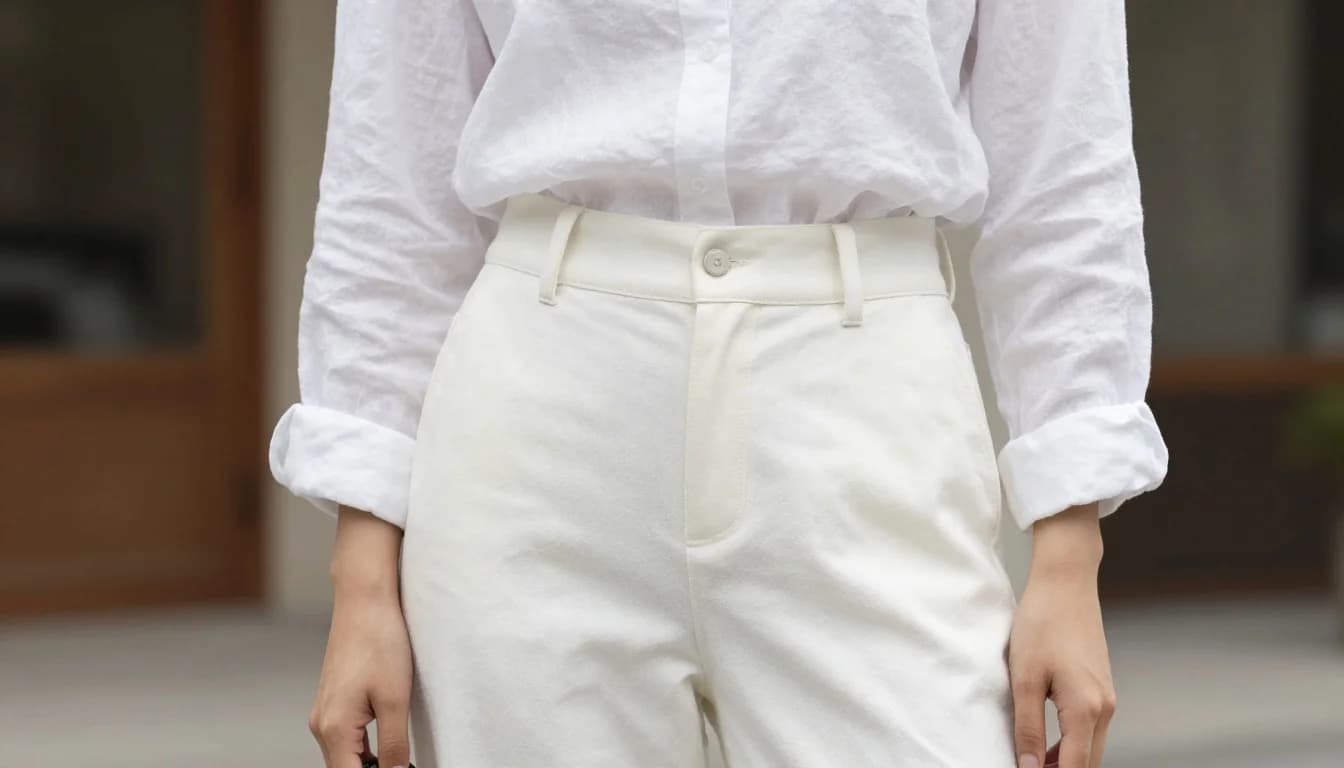
Mixing different whites (a warm ivory top with stark white trousers) creates a dissonant look because the whites' undertone difference is visible when they're next to each other. The ivory looks yellowed and the white looks cold simultaneously. If mixing whites, ensure they're either identical or that the contrast is intentional and significant (a very warm cream with very stark white).
Sheer or see-through white
Sheer white fabrics require the right undergarment — a standard nude bra in the wrong shade is often more visible under white than under other colors. Layer sheer white over a camisole in your best undertone match, or ensure any undergarment specifically matches the sheer quality. Sheer white is beautiful when layered correctly; a problem when layered incorrectly.
Stop Guessing, Start Wearing Your Colors
Discover Your PaletteGetting White Right for Your Undertone
Find your exact white and know when to use it.
Optical white fights warm undertones. Warm ivory creates the same crispness with undertone resonance.
Warm ivory can look slightly yellow against cool skin. Crisp white creates clean contrast that suits cool undertones.
Different whites side-by-side look mismatched. Choose one version and stay consistent within an outfit.
The 30-second test (hold near face in daylight) tells you which white is yours. Always test before buying.
Winter white in heavy textures (cashmere, wool) looks sophisticated and seasonal rather than off-season.
Undertone matters most at formal events when eyes are on you. Your best white in quality fabric makes the biggest difference.
White by Seasonal Palette
Each seasonal palette has its ideal version of white — from crisp optical white for winters to warm cream for autumns.
Deep Winter
Learn moreYour white is crisp, bright optical white — the starkest version. It creates maximum contrast with your deep colouring and looks polished and intentional. Warm ivory looks slightly muddy against the cool clarity of Deep Winter.
Warm Autumn
Learn moreYour white is warm cream or warm ivory — never stark. The yellow-golden quality of cream resonates with Warm Autumn's earthy warmth. Stark white creates a cool clash against the golden richness of Warm Autumn colouring.
Light Summer
Learn moreYour white is soft off-white or ecru — the gentlest version. The softness matches Light Summer's delicate, muted quality. Stark white can be too vivid; warm ivory slightly too warm. Off-white is the Goldilocks white for Light Summer.
Find Your Perfect White
The difference between a white that glows and one that drains you is undertone — and it's a small but consistently important detail in building a wardrobe that works. A personalized color analysis identifies your exact seasonal palette and tells you definitively whether your white is crisp, ivory, cream, or off-white, along with the complete wardrobe palette that makes your complexion look most alive.
Get Your Color AnalysisFrequently Asked Questions About For Your Complexion
How do I know which white looks best on me?
Hold a stark white item and a warm ivory item near your face in natural daylight and check which makes your skin look more alive. If warm ivory looks more natural and glowing, you have warm undertones — warm ivory is your white. If stark white looks crisper and cleaner, you have cool undertones — crisp white is yours. Off-white works as a universal middle ground if neither is dramatically better.
Does white look good on all skin tones?
Yes — but different versions of white suit different skin tones. Warm undertones (golden, peachy, olive) look best in warm ivory or cream. Cool undertones (pink, rosy) look best in crisp, bright white. Neutral undertones can often wear either. The key is choosing the white that matches your undertone, not just any white.
Why does white make me look washed out?
If white washes you out, it's likely the wrong undertone of white. Stark optical white near warm undertones can make the skin look slightly yellow or dull by contrast. Try warm ivory or cream instead — this often resolves the washed-out effect immediately. If even warm ivory feels draining, consider whether you need more contrast depth rather than a lighter color near your face.
Can warm undertones wear white?
Yes — warm undertones look best in warm white: ivory, cream, or warm off-white. The yellow-golden quality of these whites resonates with warm skin's undertone and creates a luminous, natural effect. Avoid stark, cool optical white, which has a blue quality that fights warm skin's golden base.
Is ivory or white better for a wedding dress?
It depends on your undertone. Warm undertones look most radiant in ivory or warm cream wedding dresses — the warmth resonates with golden or peachy skin. Cool undertones often look most striking in crisp white. The bridal rule: hold both near your face without makeup (or with minimal makeup) in good light — your skin will tell you which looks more alive.
What is the most universally flattering white?
Off-white or soft ecru is the most universally flattering white across undertones — it's neither too cool (like stark white) nor too warm (like rich ivory), making it wearable for neutral, cool, and warm undertones without creating the undertone conflicts of the more extreme versions. If you're unsure which white is yours, off-white is the safe starting point.