Who Can WearRed?
Everyone can wear red. That is not a platitude — it is a colour fact. Red spans from warm orange-red through true neutral red to cool blue-red, and within that range there is a shade for every skin tone, every undertone, and every level of contrast. The question is never whether red suits you. It is which red suits you. The wrong red can look harsh, aging, or clashing. The right red makes your complexion look luminous, your eyes look brighter, and your features look defined. Red is the single most powerful colour in fashion. Finding your version is worth the effort.
Discover Your ColorsWhy the Shade of Red Changes Everything
Red is the most visible colour in the spectrum. It commands attention, raises perceived confidence, and creates the strongest visual contrast against most skin tones. But this visibility cuts both ways. The right red illuminates your face. The wrong red competes with your face. The determining factor is temperature: warm reds (tomato, orange-red, warm scarlet) versus cool reds (cranberry, cherry, blue-red). Your skin's undertone decides which temperature of red makes you glow and which makes you look off.
Beyond temperature, depth and saturation matter. Vivid, saturated reds — true fire-engine red, bright cherry — work best on high-contrast, clear coloring. They need strong features to balance their intensity. Deep, muted reds — brick, burgundy, deep cranberry — suit muted and deep coloring where vivid red would overwhelm. The principle is matching the red's energy to your coloring's energy. A Soft Autumn in fire-engine red looks consumed by the colour. A Bright Winter in dusty brick looks underdressed.
Skin depth provides the third variable. Fair skin creates the highest contrast with red, which is why red lipstick has been a classic for fair-skinned people for centuries. Deep skin also creates powerful contrast — vivid red against deep brown skin is one of the most striking combinations in fashion. Medium skin tones need the right temperature more than the right depth, because the moderate contrast means the colour relationship depends more on harmonizing warmth or coolness than on visual contrast alone.
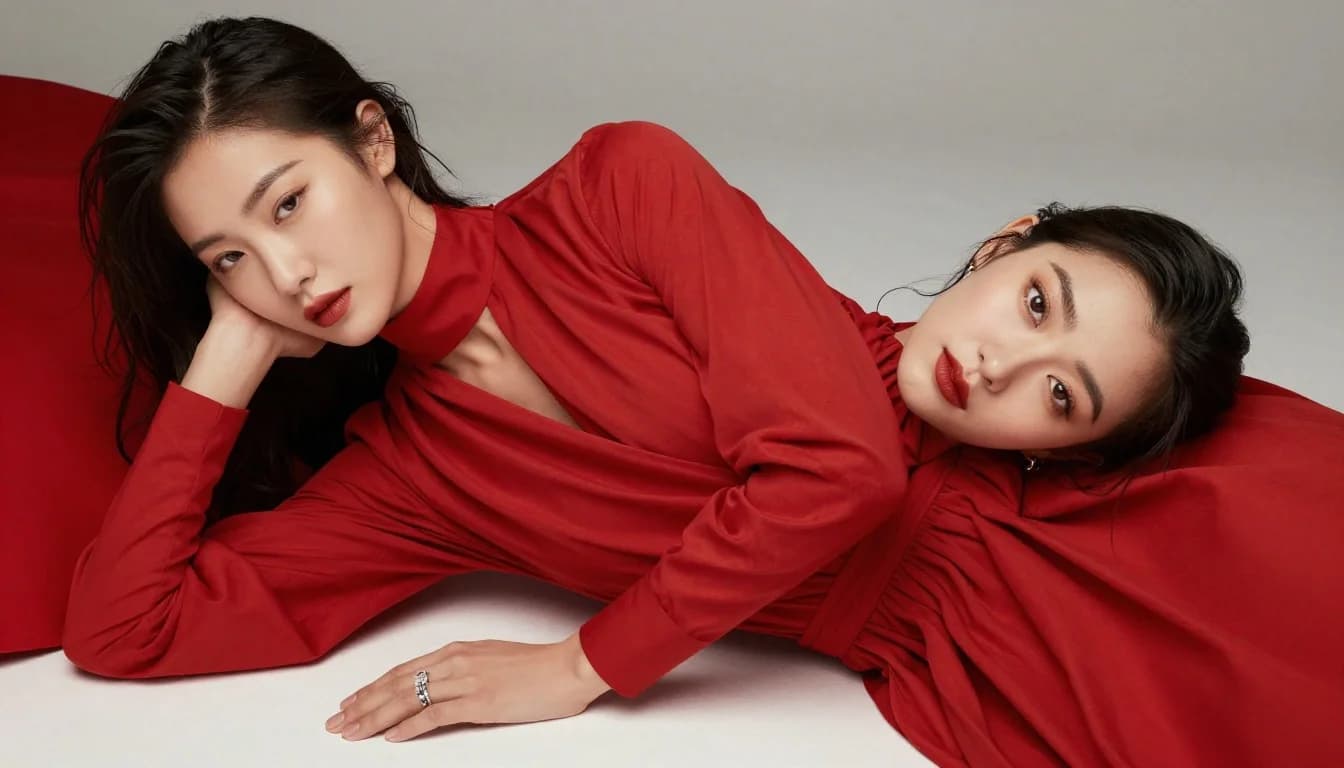
The Right Red for Your Coloring for Red?
Warm Reds: Tomato, Scarlet, Orange-Red
Warm reds have an orange base that creates a golden, energetic quality. They resonate powerfully with warm undertones — golden, peachy, olive skin. Warm tomato red is the most universally flattering warm red: vivid enough to create impact, warm enough to harmonize with golden skin. Poppy red is lighter and works on warm fair skin. Orange-red is the boldest warm version.
Cool Reds: Cherry, Cranberry, Blue-Red
Cool reds have a blue or pink base that harmonizes with cool, pink-based undertones. Cherry red is the classic cool red: vivid, blue-based, and striking on cool complexions. Cranberry is deeper and muted — excellent for cool skin with lower contrast. True blue-red is the red that reads as neither warm nor cool to most eyes but is technically cool. Raspberry-red sits at the red-purple edge.
Deep Reds: Burgundy, Wine, Oxblood
Deep reds carry serious visual weight. They suit deep coloring — Deep Autumn, Deep Winter — where the richness of the red matches the richness of the complexion. Burgundy bridges warm and cool and works on most deep skin tones regardless of undertone. Wine is slightly warmer. Oxblood has a brown quality that makes it almost a neutral. These are sophisticated, grounded reds for when vivid red feels too loud.
Muted Reds: Brick, Terracotta-Red, Dusty Rose-Red
Muted reds have been softened with grey, brown, or earth tones. They suit muted seasonal types — Soft Autumn, Soft Summer — where vivid red overwhelms the natural coloring. Brick is the warmest muted red, excellent for Soft Autumn. Dusty rose-red is cooler, suited for Soft Summer. These reds still read as red but with a quieter, more everyday energy.
Ready to Find Your Best Colors?
Get Your Color AnalysisHow to Wear Red With Confidence
Determine your red temperature first
Before worrying about depth or style, identify whether your skin is warm, cool, or neutral. Check your wrist veins in natural light. Green-toned veins suggest warm undertones — your red is tomato, scarlet, or warm brick. Blue-toned veins suggest cool undertones — your red is cherry, cranberry, or blue-red. A mix suggests neutral — you have the most flexibility. The temperature match is the single most impactful variable.
Red near the face for maximum impact
Red creates its most powerful effect near the face. A red blouse, red lip, red scarf, or red earrings all create the luminous contrast that makes the complexion glow. Red trousers or a red bag work but the skin-enhancing effect is less noticeable away from the face. When wearing red for the first time, start at the neckline where the colour-skin interaction is most visible.
Match your red lip to your clothing red
When wearing a red top and red lip together, match the temperature. A warm tomato top with a warm coral-red lip creates cohesion. A cool cherry top with a cool berry-red lip creates harmony. Mixing temperatures — cool lip with warm top — creates a subtle but noticeable discord. Either match, or wear one red and go neutral on the other.
Ground red with neutral anchors
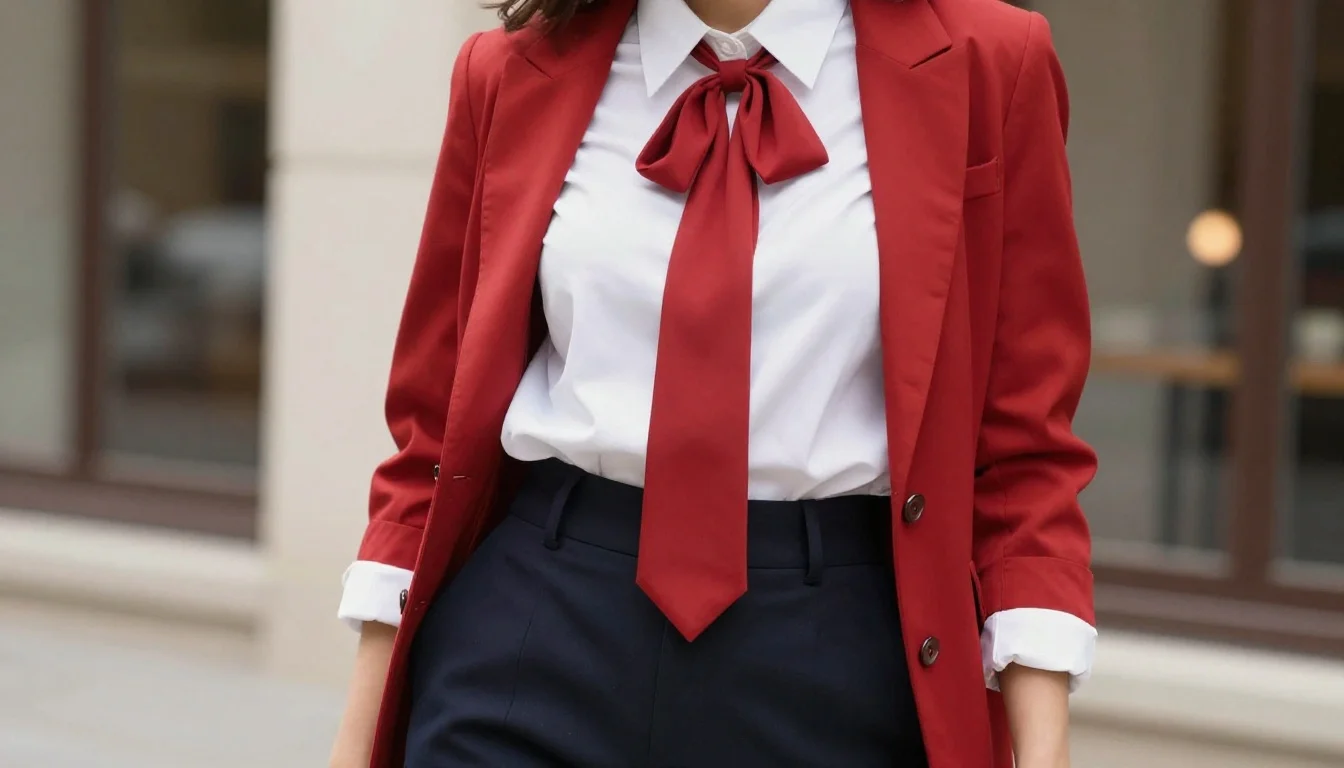
Red is strongest when grounded with neutrals: navy, charcoal, cream, camel, or black. A red sweater with navy trousers, a red dress with nude heels, or a red blazer with grey underneath lets the red make its statement without competition. Avoid pairing red with other saturated colours unless you are deliberately creating a colour-blocked look.
Red Shades That Work Against You
Warm orange-red on distinctly cool skin
Orange-red introduces warmth that clashes with cool, pink-based skin. The result: the skin looks flushed, ruddy, or slightly sallow. Cool skin should reach for cherry, cranberry, or true blue-red — versions that share the skin's cool temperature. Even a slight shift from warm to cool red transforms the effect.
Cool blue-red on distinctly warm skin
Blue-red's cool quality fights warm, golden skin. Instead of a vibrant glow, the skin can look slightly grey or muddy near the blue-red. Warm skin should choose tomato, warm scarlet, or orange-red — reds that amplify the golden warmth rather than contradicting it.
Vivid fire-engine red on muted, soft coloring
Extremely saturated red overwhelms muted complexions. The red becomes the only thing visible — the person disappears behind it. Soft Autumn, Soft Summer, and other muted types look far better in brick, dusty rose-red, or warm burgundy, where the red's energy matches the skin's softness.
Dusty muted red on vivid, high-contrast coloring
Muted brick or dusty rose-red on Bright Winter or Deep Winter coloring looks flat and undercooked. High-contrast coloring needs red with real saturation — vivid cherry, deep cranberry, or true blue-red that matches the intensity of the features.
Stop Guessing, Start Wearing Your Colors
Discover Your PaletteFind Your Red
If red has not worked for you, the temperature was probably wrong — not the colour.
Warm orange-red clashes with cool pink skin. Cherry and cranberry share the skin's cool base and create clean, striking contrast without the flushed effect.
Blue-red dulls warm golden skin. Warm scarlet resonates with your undertone and creates the vibrant glow that makes warm skin look radiant in red.
Vivid red overwhelms soft features. Brick and dusty berry carry red's power in a softer register that matches your natural saturation level.
Muted red looks flat on vivid coloring. Cherry and garnet provide the saturation and depth that high-contrast features demand for evening impact.
Very bright red can read as aggressive in work environments. Burgundy and cranberry carry red's authority with a depth that reads as polished and confident.
Temperature mismatch between lip and clothing red looks discordant. Match the temperature in both places for a cohesive, intentional effect.
Your Season, Your Red
Every seasonal palette has a signature red. Your season determines the exact temperature, depth, and saturation of the red that creates the most flattering effect on your individual coloring.
Bright Winter
Learn moreBright Winter wears the most vivid, clear, cool reds: true cherry, vivid blue-red, bright cool scarlet. Their high-contrast, cool, clear coloring can carry the most intense reds without being overwhelmed. For Bright Winter, vivid red is not a bold choice — it is the natural choice. Muted or warm reds look underwhelming on this vivid season.
Warm Autumn
Learn moreWarm Autumn wears the deepest, earthiest warm reds: warm brick, terracotta-red, deep rust-red, rich tomato. These muted, warm shades resonate with Warm Autumn's rich, earthy coloring. Vivid cool cherry would clash; deep warm brick creates harmony. Warm Autumn's reds are grounded and sophisticated.
Cool Winter
Learn moreCool Winter wears deep, cool, saturated reds: true blue-red, deep cranberry, cool garnet, rich raspberry-red. Their cool, high-contrast coloring requires reds with a distinctly blue base and genuine depth. Warm orange-reds clash with Cool Winter's cool quality. Cool reds create the powerful, elegant contrast this season is known for.
Find Your Red
Red is not reserved for the bold. It is available to everyone — you just need the right shade. Whether your red is the warm glow of tomato, the cool clarity of cherry, the grounded depth of burgundy, or the soft warmth of brick, finding your version transforms red from a colour you admire on others into a colour you own. A personalized colour analysis identifies your exact red and the confidence to wear it.
Get Your Color AnalysisFrequently Asked Questions About Red?
Can everyone wear red?
Yes. Every skin tone, every undertone, and every level of contrast has a flattering shade of red. Warm undertones suit warm reds (tomato, scarlet, brick). Cool undertones suit cool reds (cherry, cranberry, blue-red). Muted coloring suits muted reds (dusty rose-red, terracotta). High-contrast coloring suits vivid reds. The key is matching the temperature and saturation — not avoiding the colour.
What shade of red suits cool undertones?
Cool undertones are flattered by blue-based reds: cherry red, cranberry, true blue-red, raspberry-red, and deep garnet. These share the cool temperature of the skin and create clean, striking contrast. Avoid warm orange-reds and tomato reds, which can make cool skin look flushed or sallow.
What shade of red suits warm undertones?
Warm undertones are flattered by orange-based reds: tomato, warm scarlet, orange-red, poppy red, and warm brick. These resonate with the skin's golden warmth and create a vibrant glow. Avoid cool blue-reds and raspberry, which can make warm skin look slightly grey or muddy.
What red lipstick suits my skin tone?
Match the lipstick temperature to your undertone. Warm skin: warm coral-red, warm tomato lip, orange-red. Cool skin: cool cherry, berry-red, blue-based red. Neutral skin: true red with neither orange nor blue lean. For depth, fair skin wears vivid reds well; deep skin wears rich, saturated reds. Muted coloring suits dusty berry over vivid cherry.
How do I know if a red suits me?
Hold the red near your face in natural light. If your skin looks clear, bright, and energized, the temperature and depth are right. If you look flushed, sallow, or the red seems to overwhelm your features, the temperature or saturation is wrong. Try switching between a warm red and a cool red — the difference is usually obvious immediately. One will look like it belongs. The other will not.