Colors That MakeYou Look Slimmer
Color is one of the most powerful tools in your wardrobe for shaping how your body is perceived — and it has nothing to do with hiding or concealing. The science of visual weight, light absorption, and contrast management means that certain colors and color strategies genuinely create a leaner, more elongated silhouette. Understanding which colors absorb light, how monochromatic dressing works, and where to place contrast gives you control over proportion without ever compromising on style.
Discover Your ColorsThe Science of Visual Weight and Color
Visual weight is a well-documented phenomenon in both art and psychology. Lighter colors reflect more light, expanding the perceived boundary of whatever they cover. Darker colors absorb light, creating the appearance of a smaller, more defined shape. This is not a fashion myth — it's basic optics. A white surface reflects light outward, making it appear larger; a dark surface absorbs light, making it appear to recede. Applied to clothing, the same principle means dark colors genuinely minimize perceived size.
But darkness alone isn't the whole story. Monochromatic dressing — wearing a single color family from top to bottom — creates an unbroken vertical line that the eye follows without interruption. Every time the eye encounters a contrast point (a different color at the waist, a lighter top against darker bottoms), it pauses and registers a horizontal break. These breaks create the perception of segments, which emphasizes width. Monochromatic dressing eliminates those breaks entirely.
The third element is strategic contrast placement. You can use darker colors where you want the eye to skim past and lighter or brighter colors where you want to draw attention. A dark bottom with a slightly brighter top draws the eye upward and creates a visual anchor at the shoulders and face — elongating the overall impression. This isn't about hiding; it's about directing visual attention intentionally.
Colors That Create a Slimming Effect for You Look Slimmer
Deep Navy and Midnight Blue
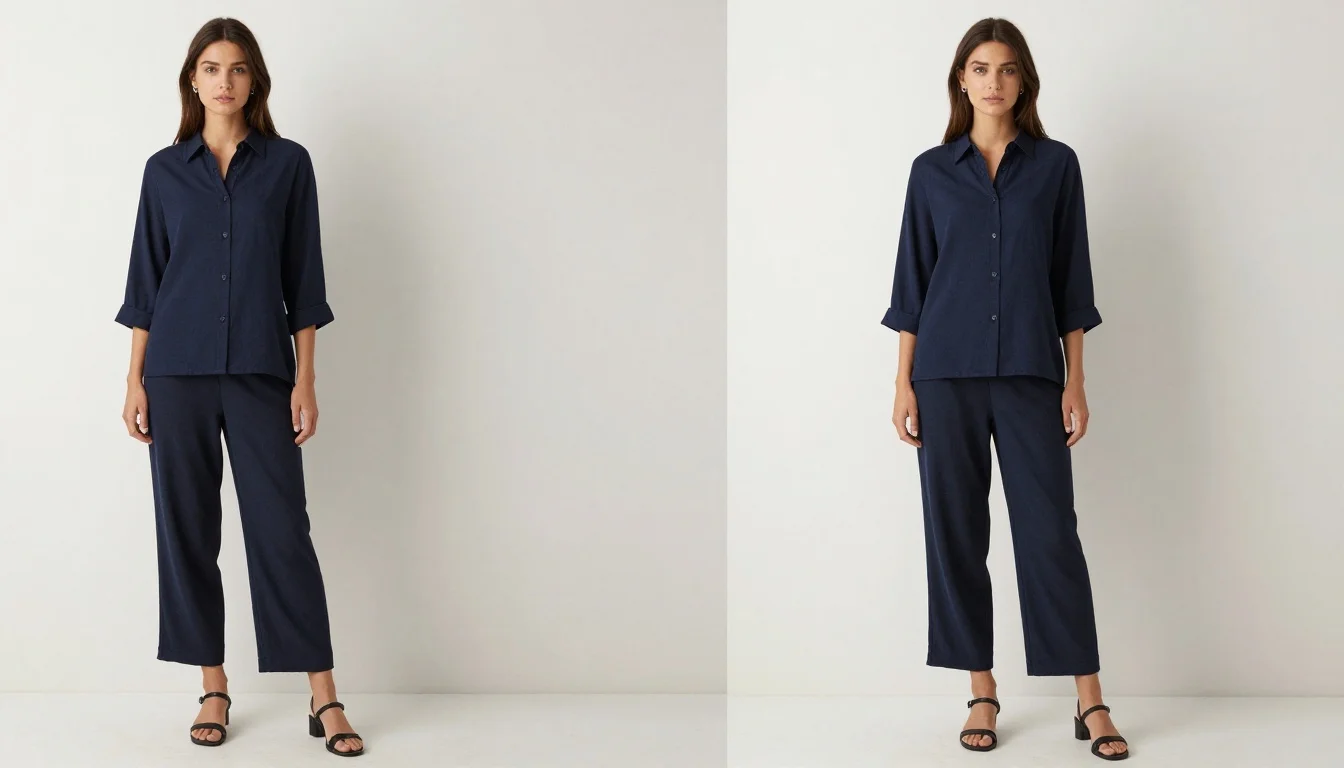
Navy is the most versatile slimming color because it absorbs light nearly as effectively as black but reads as softer, richer, and more dimensional. Midnight blue and dark indigo create the same light-absorbing effect with more visual interest. Navy also pairs with virtually every other color, making monochromatic and tonal dressing easier than with any other dark shade.
True Black and Charcoal
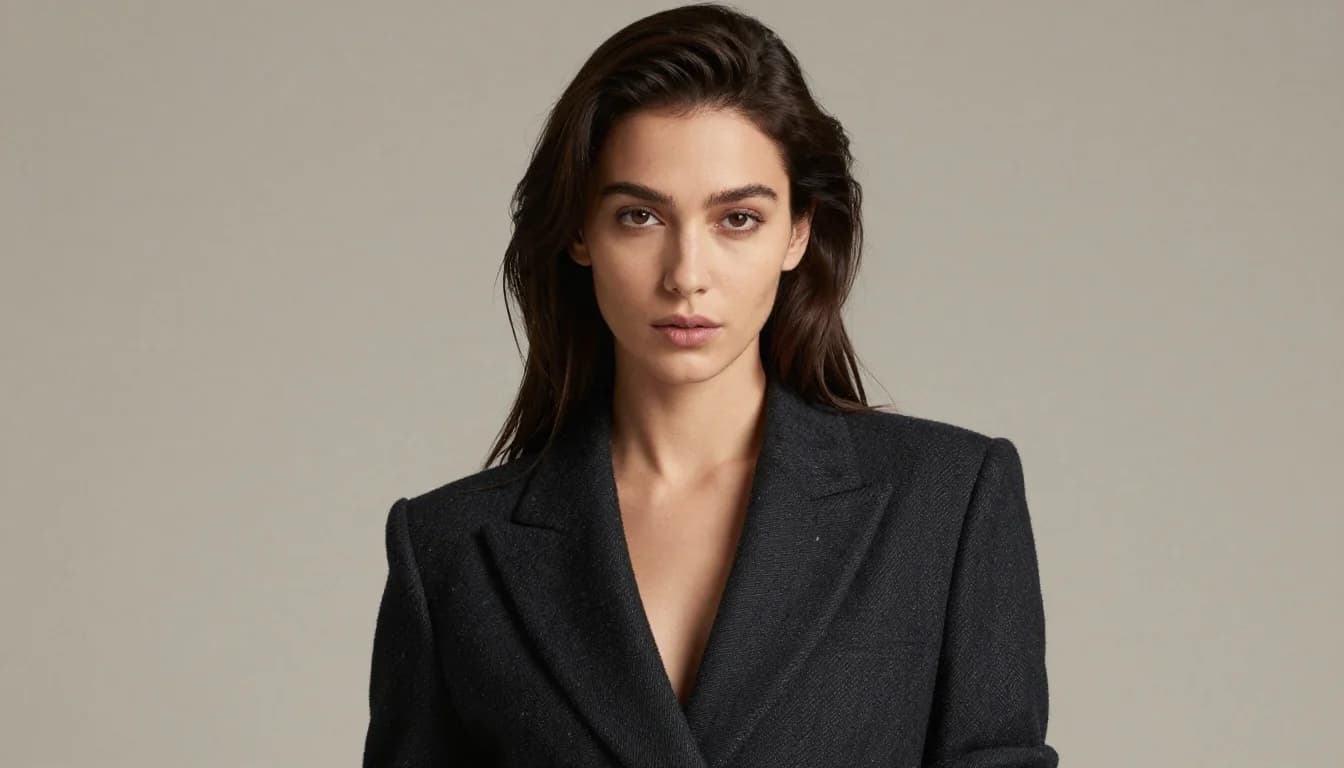
Black is the ultimate light absorber — it creates the smallest possible visual footprint for whatever surface it covers. Head-to-toe black is the most direct slimming strategy available, particularly when the fabric has a matte finish (matte absorbs more light than shiny). Deep charcoal provides a similar effect with slightly less severity, and works better on people whose natural coloring is softer or lower contrast.
Dark Burgundy and Oxblood
Dark reds and purples absorb nearly as much light as black and navy while adding richness and warmth. Burgundy and oxblood are particularly effective because they're dark enough to minimize visual weight but visually interesting enough to prevent an outfit from feeling austere. Dark plum provides the same effect with a cool-leaning edge. These are excellent alternatives when you want slimming without defaulting to black.
Forest Green and Dark Olive
Deep greens are among the most overlooked slimming colors. Forest green, hunter green, and dark olive absorb light effectively while introducing an earthy, grounded richness that reads as both sophisticated and natural. Dark olive in particular is extremely versatile — it functions as a neutral while still providing the light-absorbing benefit of a dark color.
Ready to Find Your Best Colors?
Get Your Color AnalysisHow to Use Slimming Colors Strategically
Monochromatic column dressing
The single most effective slimming strategy is wearing one color family from neck to hem. A navy top with navy trousers, a charcoal sweater with charcoal skirt, an all-black outfit — each creates an unbroken vertical line that the eye follows without interruption. The fewer horizontal breaks in your outfit, the taller and leaner you appear. Even approximate matches (dark navy with medium navy) work better than contrasting colors.
Strategic contrast placement
Place darker colors on areas you want to minimize and lighter or brighter colors on areas you want to emphasize. Dark bottoms with a slightly lighter (but not contrasting) top draws attention upward to your face and shoulders. A dark jacket over a lighter inner layer creates a vertical frame that narrows the overall silhouette. The key is keeping contrast subtle — extreme contrast creates hard breaks.
Tonal dressing for visual interest
If head-to-toe single color feels too uniform, try tonal dressing: multiple shades of the same color family. Dark navy pants, medium blue top, soft blue scarf. The subtle variation keeps the outfit interesting while maintaining the vertical line. Tonal dressing is the sophisticated middle ground between monochromatic and multicolor — slimming without severity.
Dark neutrals as your base wardrobe
Build your core wardrobe around dark neutrals — navy, charcoal, dark olive, burgundy, black — and add color strategically near your face with tops, scarves, and jewelry. Your base creates the slimming vertical line; your accent colors add personality and draw the eye upward. This approach is both flattering and practical, because dark neutrals mix and match effortlessly.
Colors That Add Visual Weight
Bright white
White reflects the maximum amount of light, expanding the perceived boundary of whatever it covers. A bright white top, for instance, makes the torso appear larger than the same shape in navy or black. If you want to wear white, opt for off-white or cream — they reflect slightly less light and create a softer, less expansive visual impression.
Pastel yellow and pale pink
Very light warm pastels — pale yellow, light peach, baby pink — reflect nearly as much light as white and also tend to sit high in visual temperature, which makes them visually 'louder' and more attention-drawing. These add visual weight and draw the eye to whatever area they cover.
High-contrast horizontal patterns
Horizontal stripes in contrasting colors (black and white, navy and cream) create repeated horizontal breaks that the eye registers as width. Each stripe is a pause point, and the overall effect emphasizes the horizontal axis of your body. If you love stripes, opt for tonal stripes (navy on navy) or vertical orientation.
Neon and highly saturated brights
Neon and extremely saturated colors — electric lime, hot pink, bright orange — are visually aggressive and draw the eye powerfully to whatever area they cover. This concentrated visual attention emphasizes the shape and size of that area. These colors are maximizers, not minimizers.
Stop Guessing, Start Wearing Your Colors
Discover Your PaletteSwaps That Slim Your Silhouette
Trading visual weight for visual length.
Khaki and cream reflect light and expand the lower body visually. Dark navy and charcoal absorb light and create a leaner line from waist to ankle.
Bright white maximizes light reflection and visual expansion. Soft grey and off-white create a similar clean effect with less visual volume.
A single dark color from shoulder to knee creates an unbroken slimming column. The same silhouette in a pastel will appear visually wider.
The color break at the waist segments your body into two parts. A single dark color elongates, and the accessory adds interest without adding visual weight.
A long, dark outer layer creates vertical lines on both sides of the body, framing and narrowing the overall silhouette.
Deep jewel tones and dark naturals provide all the richness of color without the visual expansion of neons and brights.
Finding Your Most Flattering Slimming Shades
The most effective slimming colors are dark — but the specific dark shades that suit you best depend on your undertone and seasonal palette. A warm-undertone person in cold black can look drained even while looking slim. The goal is to find the dark shades within your natural palette, so you get the slimming benefit without sacrificing how the color interacts with your complexion.
Deep Autumn
Learn moreDeep autumns look best in warm darks: rich chocolate, deep olive, dark terracotta, warm burgundy, and espresso. These absorb light effectively while harmonizing with warm, deep coloring. Avoid blue-black, which can look cold and disconnected.
Cool Winter
Learn moreCool winters look stunning in cool darks: true black, deep navy, dark plum, cool burgundy, and charcoal. Your high contrast coloring means you can handle the drama of very dark colors without being overwhelmed — and the cool undertone of these shades harmonizes perfectly.
Deep Winter
Learn moreDeep winters thrive in the darkest end of the spectrum: black, dark navy, deep wine, dark forest green, and espresso. Your natural depth and contrast mean these colors look rich and intentional rather than heavy — and they create the strongest possible slimming effect.
Find Your Most Flattering Dark Shades
The best slimming colors aren't just dark — they're the right dark for your natural coloring. A personalized color analysis identifies the specific dark shades that absorb light and create a lean silhouette while also harmonizing with your skin tone, hair, and eyes. When your dark shades are right for you, you look both slimmer and more vibrant — instead of choosing between the two.
Get Your Color AnalysisFrequently Asked Questions About You Look Slimmer
Does black really make you look slimmer?
Yes — black absorbs the most light of any color, genuinely reducing the perceived boundary of the area it covers. The effect is strongest with matte fabrics (which absorb more light than shiny ones) and in monochromatic outfits where there are no contrast breaks. However, black isn't the only slimming color — deep navy, charcoal, dark burgundy, and forest green all absorb light effectively.
What is monochromatic dressing and why is it slimming?
Monochromatic dressing means wearing a single color family from head to toe. It's slimming because the eye follows an unbroken vertical line without pausing at color-change points. Each time the eye encounters a contrast break (different colored top and bottom), it registers a horizontal line that emphasizes width. Monochromatic dressing eliminates those breaks.
Does white really make you look bigger?
White reflects the maximum amount of light, which expands the perceived boundary of whatever it covers. This does make an area appear slightly larger than the same area in a dark color. The effect is proportional — a white top makes the torso appear larger relative to dark bottoms. Off-white and cream reflect less light and have a slightly less expansive effect.
Can warm-undertone people wear black for slimming?
Warm-undertone people can wear black, but pure cool-toned black can sometimes drain the warmth from their complexion. Deep charcoal, espresso brown, dark olive, and warm burgundy are often more flattering alternatives that provide nearly the same slimming effect while harmonizing with warm coloring. If you love black, keep it below the face and wear a warm-toned color near your neckline.
Are vertical stripes really slimming?
Vertical stripes in subtle tonal variations (navy on navy, dark grey on medium grey) can elongate the body by guiding the eye vertically. However, high-contrast vertical stripes (black and white) can actually draw more attention to the area they cover, partially negating the directional effect. The most slimming stripe is a subtle tonal vertical — not a bold contrasting one.